

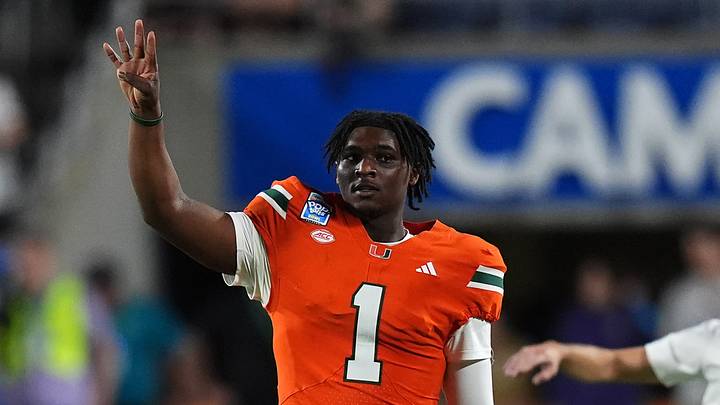
Miami heads to North Carolina this weekend with a 7-0 record, seeking its eighth consecutive victory. Of the 10 previous teams that began a season with seven straight wins, eight also captured their next game. Only the 2003 and 2013 squads dropped their first game immediately after the undefeated stretch.
Those early runs have produced three national championships, three defeats in title games, one Orange Bowl victory and three additional bowl appearances, with every team finishing with at least nine wins.
Quick note before we begin
Miami's first football team in 1926 also opened 7-0 and finished 8-0 under Howard Buck, though the university classifies that group as a freshman squad separate from the varsity program that began in 1927. Its eighth game was a 9-7 win over Howard and the team outscored opponents 122-13 while recording six shutouts. Including that squad and the current season, Miami has produced 12 teams that started 7-0, with 11 of them varsity.
Seasons that ended with national titles
Jimmy Johnson's 1987 Hurricanes beat Virginia Tech 27-13 in their eighth game and remained unbeaten. Steve Walsh and Michael Irvin steered the team through a regular season that featured a 26-25 comeback at Florida State and a 24-0 shutout of Notre Dame. Miami then avenged the previous year's Fiesta Bowl disappointment by topping No. 1 Oklahoma 20-14 in the Orange Bowl for its second national championship.
Dennis Erickson's 1991 group handled West Virginia 27-3 in Game 8. A week later the Hurricanes slipped past Florida State 17-16 after a potential game-winning field goal sailed wide right. With Gino Torretta at quarterback and a stout defense, Miami finished the regular season without a loss and blanked Nebraska 22-0 in the Orange Bowl to claim the AP national title while Washington sat atop the coaches' poll.
Larry Coker's 2001 team survived a tight eighth game at Boston College, winning 18-7 when Ed Reed returned a lateral for a touchdown with 13 seconds left. The escape kept an undefeated campaign intact for a roster that included Ken Dorsey, Clinton Portis, Andre Johnson and Reed. Miami later routed Syracuse 59-0 and Washington 65-7 before beating Nebraska 37-14 in the Rose Bowl for the program's fifth national championship.
Title-game defeats
Johnson's 1986 squad entered its eighth game ranked No. 1 and dispatched No. 20 Florida State 41-23. Vinny Testaverde had already engineered a September win over top-ranked Oklahoma and later became the program's first Heisman Trophy winner. Miami completed an 11-0 regular season and entered the Fiesta Bowl favored against No. 2 Penn State, yet Testaverde threw five interceptions, including one near the goal line on the final possession, and the Nittany Lions won 14-10 to take the national championship.
Erickson's 1992 team defeated West Virginia 35-23 in Game 8 and finished the regular season 11-0. Torretta captured the program's second Heisman after throwing for 3,070 yards and 19 touchdowns. Miami navigated several earlier close calls, including an 8-7 win over Arizona and a 19-16 victory against Florida State, but fell 34-13 to No. 2 Alabama in the Sugar Bowl after Torretta threw three interceptions.
The defending champions in 2002 beat Rutgers 42-17 in their eighth game and carried a 34-game winning streak into the Fiesta Bowl. Dorsey and Willis McGahee powered victories over Florida State, Tennessee and Virginia Tech. Ohio State ultimately won 31-24 in double overtime after a disputed pass-interference call on fourth down in the first overtime extended a Buckeyes drive.
Seasons that lost in Game 8
Coker's 2003 Hurricanes arrived at Virginia Tech ranked No. 2 with a 39-game regular-season winning streak. The Hokies ended the run with a 31-7 victory in Blacksburg and Miami then dropped a game 10-6 to Tennessee the next week, sliding from 7-0 to 7-2. Anchored by Sean Taylor, Jonathan Vilma and Kellen Winslow II, the team rebounded to share the Big East title and closed the year with a 16-14 Orange Bowl win over Florida State, its second victory against the Seminoles that season.
Al Golden's 2013 team traveled to No. 3 Florida State ranked No. 7. The Seminoles won 41-14, and Miami lost running back Duke Johnson to a season-ending ankle injury. Losses to Virginia Tech and Duke followed, turning the 7-0 start into a 7-3 record. The Hurricanes recovered to beat Virginia and Pitt but fell 36-9 to Louisville in the Russell Athletic Bowl. The year also brought the end of Miami's lengthy NCAA investigation and a return to postseason eligibility, yet the early promise yielded only nine victories.
Recent seasons that finished 10-3
Mark Richt's 2017 team reached 7-0 with a 24-19 win at North Carolina, the same venue Miami visits this weekend. The Hurricanes then beat No. 13 Virginia Tech 28-10 in their eighth game and routed No. 3 Notre Dame 41-8 a week later as the Turnover Chain gained national attention and Miami clinched the ACC Coastal Division. After climbing to No. 2 at 10-0, the team lost its final three games: 24-14 to Pitt, 38-3 to Clemson in the ACC championship and 34-24 to Wisconsin in the Orange Bowl. The season restored national interest in Miami football but ended short of an ACC title or national championship.
Mario Cristobal's 2024 squad defeated Florida State 36-14 in Game 8 and Duke 53-31 the following week to reach 9-0, the program's best start since 2017. Cam Ward, later named ACC Player of the Year and Davey O'Brien Award winner, set Miami single-season records with 4,313 passing yards and 39 touchdowns. Defensive inconsistencies contributed to a 28-23 loss at Georgia Tech, and the Hurricanes later squandered a 21-0 lead in a 42-38 defeat at Syracuse that removed them from ACC title contention and the College Football Playoff. Miami then fell 42-41 to Iowa State in the Pop-Tarts Bowl, finishing with three losses in its final four games.
 Add us as a preferred source on Google