

It took the NCAA long enough, but they are finally going to adjust the targeting rule for college football. Now a player will not miss the first half of the next game for their first infraction. Repeat offenders will be dealt with accordingly, and that's fair. It's not perfect, but it's a good start.
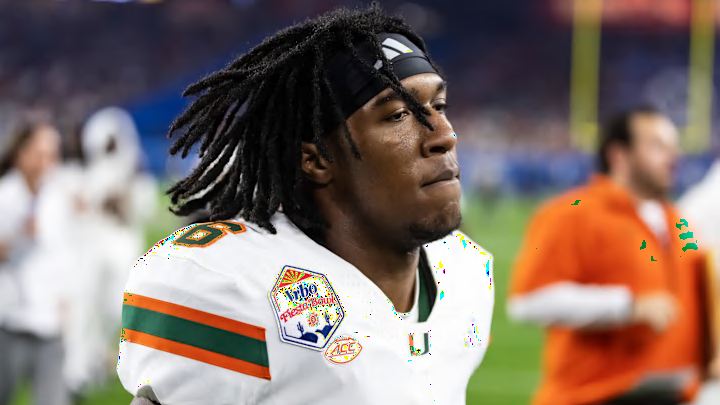
Sadly, it won't right the wrong that forced Xavier Lucas to miss the first half of the CFP Championship Game against Indiana because he got flagged for a target on Ole Miss receiver Cayden Lee midway through the fourth quarter of the Fiesta Bowl. What made it worse was that this was a questionable call at best.
Targeting rule changes were approved for the 2026 season.
— Pete Nakos (@PeteNakos) March 19, 2026
The proposal that would have required players to wear leg coverings from the top of their shoes to the bottom of their pants was not approved.https://t.co/G4IgDI4VyA https://t.co/TGjsnrQDnW
NCAA makes necessary changes to targeting rule
Maybe it was the Lucas-Lee play that forced a change. Maybe the NCAA finally realized that having a blanket rule like this on a judgment call that officials can get wrong as much as they do right shouldn't cost a player half of a game. Whatever it is, it should've happened much sooner.
As the rule will stand in 2026, a player that commits targeting will be ejected for the remainder of the game, regardless of when it happens. That means that players who commit targeting in the second half won't have the penalty carry over to the next game. A second-time infraction will carry a half-game suspension and the third infraction will carry a full-game suspension. Second and third infractions can be appealed.
Imo this isn’t targeting. As Xavier Lucas starts the tackling motion Cayden Lee then drops low.
— Garrett Armbrust (@4thandsaturday) January 9, 2026
I guess it’s a 50/50 call… I wouldn’t have called it but we have to get the helmet/helmet is always targeting notion out of CFB because it’s not always.
pic.twitter.com/ZfrgP0pqw2
That's all fine and even though it doesn't change the past, it's a good adjustment to the rule. The NCAA should go a bit further and start determining intent because not all targets are created equal. If college basketball can determine the intent of a flagrant foul, there's no reason football can't do it for targeting.
Hurricane fans are still justified to feel cheated and upset about the rule. Because of a questionable targeting call, Miami wasn't able to field its best team for the first 30 minutes of the game that decided the national championship. No mea culpa after the fact will fix that.
 Add us as a preferred source on Google