

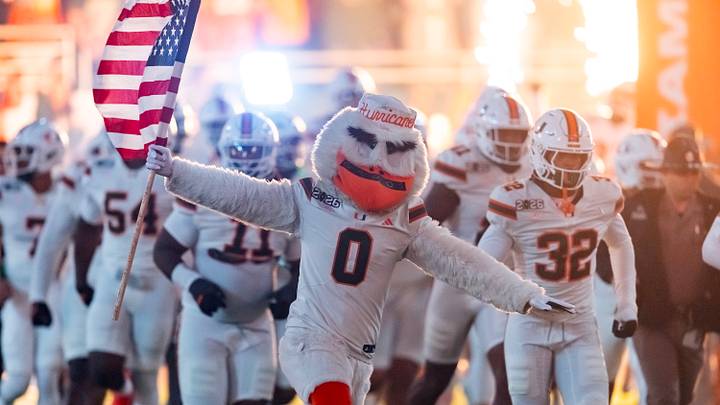
College football is one of the fastest-changing sports in the world at this point, with constant adjustments to the rules and schedule formatting. It can be tough to keep up, and with the latest release from the National Football Foundation, we now have more rules changes for the 2026 season. Here's what Miami fans, and college football fans, need to know heading into the new season.
A quick note: this is excluding the changes to playoff formatting, which has been finalized for the upcoming season.
2026 college football rule changes
- A player ejected for a first targeting penalty of the season can play the next game, even if it happened in the second half. The player is still ejected from the current game.
- A second targeting ejection means missing the first half of the next game. A third or subsequent one brings a full-game suspension. Conferences can still appeal repeat targeting penalties.
- Offensive pass interference is dropping from 15 yards to 10 yards, while defensive pass interference rules are not changing.
- For unsportsmanlike-conduct, officials are going to focus on direct taunting, actions that interfere with the game and celebrations that demean an opponent/the sport.
- Gun/weapon gestures, throat-slash or nose-wipe gestures, removing a helmet after the play outside permitted situations, clear dead-ball contact and forcibly pulling or pushing players off a pile after the whistle will still be automatic unsportsmanlike penalties.
- After a fair catch on a punt or kickoff, a team can attempt an uncontested field goal from the spot of the catch. It can also be attempted as an untimed down if the fair catch ends a half.
- Coaches now get two replay challenges each game. If a coach wins at least, he receives a third challenge.
- Replay reviews late in halves will no longer automatically reset the play clock to 25 seconds. After the two-minute timeout, the play clock can instead be frozen at its previous time, with a minimum of 10 seconds.
How the rule changes would have changed Miami's 2025 season
Xavier Lucas would have been eligible for the entire national championship game under the new targeting rules. Lucas was ejected for targeting in the fourth quarter of Miami's win over Ole Miss, which forced him to miss the first half against Indiana.
Malachi Toney's offensive pass interference penalty against SMU would have cost Miami 10 yards instead of 15. Miami had reached the SMU 23 before the penalty pushed the Hurricanes back to the 38. Under the new rule, the ball instead would have been placed at the 33. Miami eventually punted from the SMU 39 on that possession, so the five-yard difference could have put the Hurricanes within a more realistic field-goal range in a game they lost 26-20 in overtime.
 Add us as a preferred source on Google