

There's a conversation about the Group of Six happening on social media that deserves your attention.
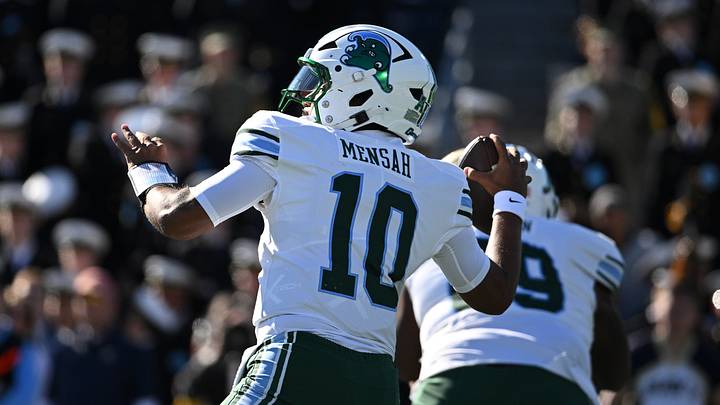
On a September afternoon in 2024, Tulane went toe-to-toe with then-No. 17 Kansas State and, for long stretches, looked every bit the equal of its Power conference opponent. Darian Mensah threw two touchdown passes to tight end Alex Bauman, the Green Wave led in the fourth quarter, and a non-P4 program once again demonstrated that they can close the gap on any given Saturday.
Kansas State eventually escaped with a 34-27 win, but fans are focused on what happened after the final whistle blew. Mensah eventually made his way to Miami after a stop at Duke, Bauman transferred directly to Coral Gables, and Tulane, the program that had developed both players into productive contributors, was left to reload.
Moves such as those have become the standard operating procedure in modern college football
Among the leading Group of Six skill-position players eligible to transfer, the percentage moving to Power 4 programs climbed from roughly 6% in 2021 to more than 55% in 2025. When the best performers at that level decide to enter the portal, the overwhelming majority now land in the Power conferences, effectively turning the lower tier into a free developmental league for P4 programs.
People can call me a jerk, but THIS is why the G5 is dying.
— The cfb lliason (@realfbllliason) August 22, 2026
Tulane went toe-to-toe with Kansas State. Darian Mensah threw 2 TDs to Alex Bauman and had them leading in the 4th.
Where did Mensah and Bauman go? Miami.
And how much compensation did Tulane get from Miami for… https://t.co/FAhZUNdsys pic.twitter.com/UrjFIOeLko
Coach movement also contributes to the rising disparity
When Curt Cignetti left James Madison for Indiana after the 2023 season, 13 players followed him through the portal.
James Madison was left to rebuild without the continuity those players had provided. Similar migrations occur whenever successful Group of Six coaches are hired by Power programs, giving the new employer a head start while the former program starts over.
Ironically, the two Group of Six schools that made the playoffs last season were Tulane and James Madison. But just because some programs are able to handle the turnover, that doesn't mean that it isn't crippling the rest of the Group of Six.
The same pattern is present in the NFL Draft
The number of players who finish their college careers at Group of Six schools and then get selected has declined sharply, falling from 48 in 2020 into the mid-teens or low twenties in recent drafts. In the 2026 draft, only 15 players who completed their careers at Group of Six programs were chosen, yet 29 who began at that level were drafted after transferring to Power 4 schools.
The next time the question arises of why the Group of Six cannot consistently close the gap with the Power 4, the answer should be simple. The current structure ensures that the moment a Group of Six program develops a player capable of helping it compete, that player becomes available to the highest bidder, which includes a school like Miami.
 Add us as a preferred source on Google