

A CBS Sports poll of more than 50 industry insiders reveals that several Power Four programs have pushed total roster spending past $40 million for the 2026 season. The survey included athletic directors, general managers, personnel executives, salary-cap experts, agents, and boosters. NIL deals, revenue-sharing payments, and transfer-portal acquisitions were all counted.
Top tier: More than $40 million
LSU sits in a category of its own, with some projections approaching $50 million. Honestly, with Lane Kiffin coming into town, this makes total sense.
Other programs confirmed in the $40 million-or-more range
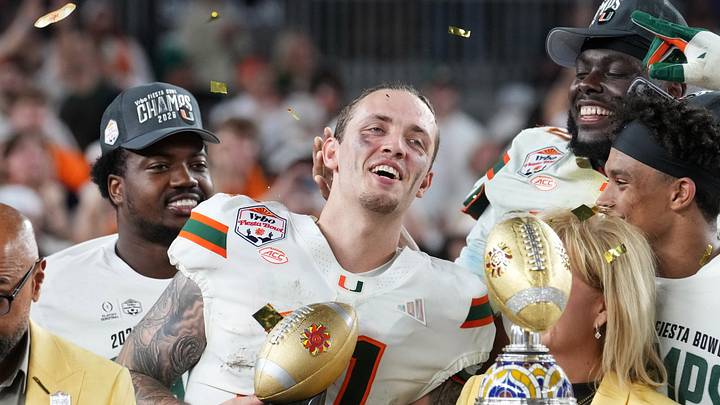
- Miami: Darian Mensah (who broke a $4 million NIL package at Duke) and multiple seven-figure contracts for other players.
- Ohio State: WR Jeremiah Smith is among the highest-paid players in the country, with a deal that could be eight figures. Earlier in the offseason it was reported that he turned down a $10 million transfer offer. Maybe that is in part because Ohio State matched it?
- Oregon: The Ducks made sure to pay quarterback Dante Moore and that probably influenced him to stay in college instead of declaring for the NFL draft. Obviously, Oregon has massive resources and the program is returning a lot of high level talent, so that is also contributing to their high payroll.
- Texas: The Longhorns are above $40 million despite some program claims to the contrary. Wide receiver Cam Coleman drew a reported $4 million transfer offer.
- Notre Dame: Heavy investment in high-school recruiting and selective portal additions. Marcus Freeman has the Irish in a great spot.
- Texas A&M: Upper-$30 million base with incentives that can push the total into the $40s. QB Marcel Reed is among their highest-paid players.
Second tier: Upper $30 million range
The poll also established a second tier of teams in the $30 million ballpark.
- Georgia
- Michigan
- Ole Miss
- Tennessee
- USC
Is this good for college football?
That's a loaded question. There was once a time where players could only get paid under the table. Sure, in that system some players made a little money, but the majority really never came close to earning anything of note for their services. And they certainly didn't make what they were actually worth. So from the players perspective, it doesn't matter if it is "good" for college football. This is better than any alternative that we saw in the past.
But for where the sport is headed, maybe there is a concern that things will be shaken so much that college football loses its mystique. A 24-team playoff, two super conferences, collective bargaining agreements that end up hurting the players, etc. are all very real possibilities in the future.
Conventional wisdom would say that the sport, in those scenarios, might cause more problems for itself than it actually solves.
If there is anything that should be taken into account it should be the players. But let's not lie to ourselves, if people continue to watch and ratings continue to go up, it doesn't matter if it's "good" for college football. College football would be richer, and that's all that matters to those making the decisions.
 Add us as a preferred source on Google